Lorem ipsum dolor sit amet

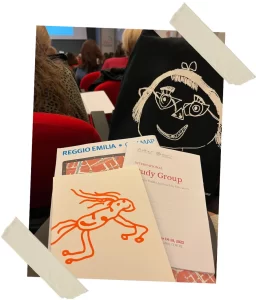
International Study Group at Reggio Emilia 2022

International Study Group at Reggio Emilia 2022

A group of 29 educators embarked on a journey to reinforce and deepen their understanding of the Reggio Emilia approach, right at the city where its name was derived.


“The study trip allowed me to gain a better understanding of the Reggio Emilia approach through immersing in the culture and history. It gives me an insight to their perspective of the approach.”

– Sharifah Omar, Centre Leader,

E-Bridge Pre-School Rivervale Crescent

Lectures and presentations by pedagogistas, atelieristas and teachers

Nothing beats hearing directly from the practitioners in Reggio Emilia! Be it new or experienced in the approach, participants all had something to take away from the presentations.

“The concept of the 100 Languages of Reggio Emilia has left a profound impact on me. I was impressed by how Reggio educators recognise and celebrate the unique ways in which children communicate and express themselves. This reinforced my belief that every child has a valuable voice, and it is our responsibility as educators to create opportunities for them to share their ideas and perspectives.”

– Qian Xiaoli, Senior Chinese Language Specialist,

PAP Community Foundation

Visits to infant-toddler centres and preschools

Participants got to visit municipal infant-toddler centres, such as Nilde Lotti and Panda, and municipal preschools like Michelangelo. This was the highlight for many participants as they could connect to what was shared in the lectures and see for themselves how the learning was being supported and made visible.
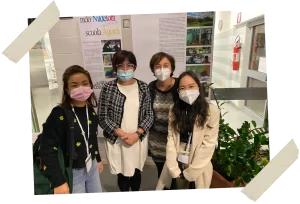
 

Participants, He Hua and Sim Jianing, with the Principal of Nilde Lotti infant-toddler centre

“I was able to experience first-hand strong respect that teachers have for children, and how they place a great emphasis on children’s expression.”
– Chao Daijing, Lead Curriculum Specialist,
MY World Preschool

“The learning environment, the documentation and interpretations of children’s learning, as well as some of the projects that they have showcased was a direct lens into their approach.”
– Madihah Tahar, Senior Centre Leader,
E-Bridge Pre-School
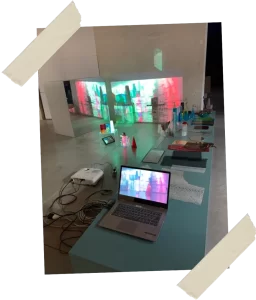
Ray of Light Atelier at Loris Malaguzzi International Centre

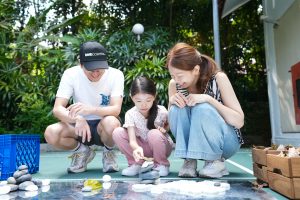
**A group of E-Bridge Pre-School educators were intrigued by the Light Atelier and decided to launch projects that empower infants and children to explore ‘light’ as a medium. Find out more here!

Ateliers

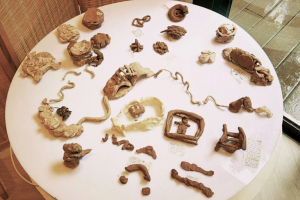
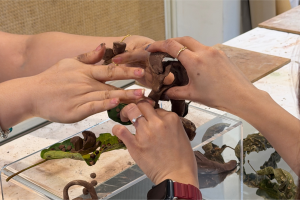
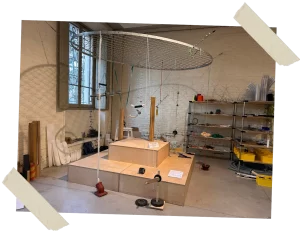
Apart from just listening and watching, participants were given the opportunity to join an atelier, facilitated by Reggio Children atelieristas, for a first-hand experience! These are some of the ateliers offered:

  • The Points of View atelier (photography)
  • The Languages of Gears atelier (motions & mechanics)
  • Digital Landscapes atelier (digital tools)
  • Ray of Light atelier

“The sight of the space and set up of the atelier was enticing and exciting for me, everything in it seemed to be inviting me to lay hands and explore. During the workshop, what surprised me was the assignment of uncommon project ideas, like making an object roll up a ramp. My first impression of it was – How is it possible? But we were supported with thought-provoking questions, the easily accessible materials also helped my group to conduct various experiments in search of the endless possibilities to achieve the task. It was in this process of finding answers that I realised we have discovered beyond more that we wanted to know.”

– Sim Jianing, Mandarin Teacher,

EtonHouse Zhong Hua Pre-School

Visit Reggio Children website to find out more about the ateliers they offer at Loris Malaguzzi International Centre.

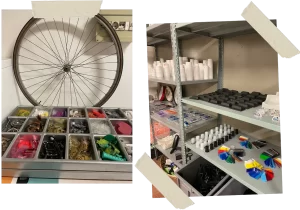
Remida, the creative recycling centre

The concept of Loose Parts is nothing new, but the range of materials available at Remida was definitely eye-opening. The Remida centre recovers about 20 tons of “waste materials” from local companies every year, which are then offered as resources to schools and associations.


“The Remida waste recycling station is both environmentally friendly and artistic. Although this requires a lot of resources and support from the community I hope that one day we can have our own recycling station in Singapore.”

– Li Tingting, Mandarin Teacher,

EtonHouse Pre-School Mountbatten 717

Conversations with the protagonists of the educational project

Part of the success of the educational project in Reggio Emilia goes to strong commitment and cooperation from the community (e.g. teachers, parents and school staff). Through these conversations, participants were able to learn and understand how the whole community comes together for children.


“After the study trip, I learnt and understand that we can never bring and implement the whole approach back here because of cultural differences. However, what we can do is instead blend elements of it into our curriculum.”

– Heng Leyi, Class Teacher,

EtonHouse Pre-School Mountbatten 223

Pre- and post-trip dialogues

Participants attended a pre-trip dialogue, where REACH facilitators helped them get prepared for the intensive five-day study group. Facilitators shared their past experiences and briefed the participants on what to take note of in order to get the most out of the trip. After the trip, naturally, the participants came back with lots of ideas and questions; REACH facilitators helped to unpack some of the questions and gave suggestions on how to turn their ideas into reality.

You May Also Like This

Participating in the REACH Chinese Foundational Study Programme was truly a privilege and a valuable opportunity for professional growth. More than just a week of learning, it felt like an intentional pause from my daily responsibilities—a dedicated time to reflect, reconnect, and re-examine our practices on the ground through a different lens.


Throughout the programme, I was deeply inspired by the Reggio Emilia philosophy and its unwavering belief in the image of the child as capable, competent, and full of potential. Listening to the sharing sessions and visiting learning environments prompted me to reflect honestly on my own practice. At times, I even felt a sense of guilt, realising that we may unintentionally limit children’s opportunities because of concerns around safety, time, space, or routines. While these constraints are real, the programme challenged me to rethink whether they should define what is possible.


One of the most impactful experiences was visiting EtonHouse International Pre-School Claymore. I was fascinated by how every space, no matter how small, was intentionally designed to provoke thinking, invite exploration, and honour children’s voices. Even a narrow corridor was transformed into a meaningful learning environment. This experience reinforced the idea that it is not the size of the space that matters, but the intention behind its design. Every corner reflected a deep respect for children and their capabilities, demonstrating that the image of the child can be made visible throughout the environment.

This experience shifted my perspective on the role of the environment as the third teacher. Rather than viewing our physical constraints as limitations, I began to see opportunities to redesign and reimagine the spaces we already have. It reminded me that meaningful learning can happen anywhere when educators carefully consider the purpose, possibilities, and invitations embedded within the environment.

The discussions on pedagogical documentation also resonated strongly with me. I came to appreciate that documentation is not merely about displaying children’s work or recording observations, but about making learning visible, interpreting children’s theories, and engaging in collaborative reflection with colleagues.


As a Lead preschool educator, this programme has strengthened my commitment to advocating for children’s rights, agency, and participation. It has inspired me to continue reflecting on our everyday practices, question long-held assumptions, and create environments that empower children to explore, express themselves, and construct knowledge through the hundred languages available to them.

I leave this programme feeling both inspired and challenged. While there is still much to learn and improve, I am motivated to bring these reflections back to my centre and work alongside my team to create more intentional, responsive, and meaningful learning experiences for every child. The greatest takeaway for me is that meaningful change does not always require more space or more resources—it begins with a change in mindset and a renewed belief in the extraordinary capabilities of every child.

Reflection by:
Kylye Ng Syn Wui
Lead Preschool Educator (Mandarin)
E-Bridge Pre-School

The Reggio Emilia Approach to early childhood education places a strong emphasis on the role of families in a child’s learning journey. Unlike traditional educational models where parents play a secondary role, Reggio Emilia settings view families as essential partners in the learning process. This philosophy fosters a culture of collaboration, respect, and shared responsibility between educators, children, and families.

One of the key principles of Reggio Emilia is the belief that children learn best in a supportive, community-driven environment. Parents are encouraged to participate actively in their child’s education, not just as observers but as contributors. They engage in regular discussions with teachers, help document children’s progress, and even take part in classroom activities. This partnership ensures that learning extends beyond the classroom and into the home, creating a seamless connection between school and family life.

Furthermore, Reggio Emilia settings value the diversity of family backgrounds and perspectives. Educators recognise that each family’s unique culture and experiences enrich the learning environment. By integrating family traditions, languages, and values into the curriculum, children develop a deeper understanding of the world around them. This inclusivity fosters a sense of belonging and respect among all members of the school community. 

In conclusion, the culture of families in Reggio Emilia settings is one of active participation, mutual respect, and shared learning. By embracing family involvement, these schools create a nurturing environment where children, parents, and educators grow together as a learning community.

Reflection by:
Joanne Tong
Senior Quality Assurance Manager
E-Bridge Pre-School

Reflecting on the study trip to the Loris Malaguzzi Centre in Reggio Emilia, Italy, has led to a significant transformation in my views on environments for young children. The Centre and the pre-schools we visited exemplify Malaguzzi’s vision, embracing a philosophy that sees children as capable, resourceful, and active participants in their learning journey.

The concept of the “hundred languages of children” resonated profoundly, emphasizing the value of various forms of expression and learning beyond traditional education approach. The significant impact of long-term, inquiry-based learning was clearly visible in the children’s intricate projects, which were carefully planned and facilitated to align with their interests and questions. The atelier, a space for exploration and experimentation with different materials, showcased how creative expression promotes critical thinking and problem-solving skills.

The focus on documentation, not merely as a record but as a means for reflection and dialogue, was especially striking. The thoughtfully displayed project documentation-featuring photographs, documentations, and children’s artwork— revealed the depth of their learning processes and the educators’ insightful observations.

The collaborative spirit among educators, children, and families was evident throughout the pre-schools. Its environment, designed to encourage interaction and communication, reflected a community committed to nurturing children’s potential. This experience has deepened my appreciation for the importance of creating learning environments that are responsive, stimulating, and respectful of children’s natural curiosity and creativity. The Reggio Emilia Approach should not be seen as a method to replicate. but rather as an inspiration to foster a culture of listening, observation. and respect for children’s interests and abilities.

Reflection by:
Cathy Chew
Senior Centre Leader
E-Bridge Pre-School